Choosing the right Decorative Wall Board involves more than matching colors with furniture. The surface must suit the room, climate, lighting, and daily use. A board that looks elegant in a showroom may appear too dark beside a small window. It may also show fingerprints near a busy hallway.
Experienced installers usually inspect the wall substrate before recommending a product. Uneven plaster, moisture, and weak fixing points can affect the final result. Ask for samples, technical data, cleaning instructions, and warranty terms. Check the board’s thickness, core material, edge design, and installation method. For kitchens or bathrooms, moisture resistance deserves careful attention. For bedrooms or offices, acoustic performance may matter more. Always confirm safety claims through reliable manufacturer documents and applicable local standards.
A sensible choice balances appearance, performance, maintenance, and cost. Do not trust dramatic product descriptions alone. Some “premium” finishes scratch easily. Some low-cost panels require extra preparation, which changes the real budget. Measure the wall carefully, including doors, sockets, and corners. Then compare several samples under daylight and warm evening lighting. No option is perfect. Even a well-reviewed Decorative Wall Board may fail when installed on a damp or poorly prepared wall. Professional advice can prevent expensive changes later, although advice should still be questioned and documented. The best result is not simply the most attractive board. It is the one that remains practical, stable, and pleasing after years of ordinary use.
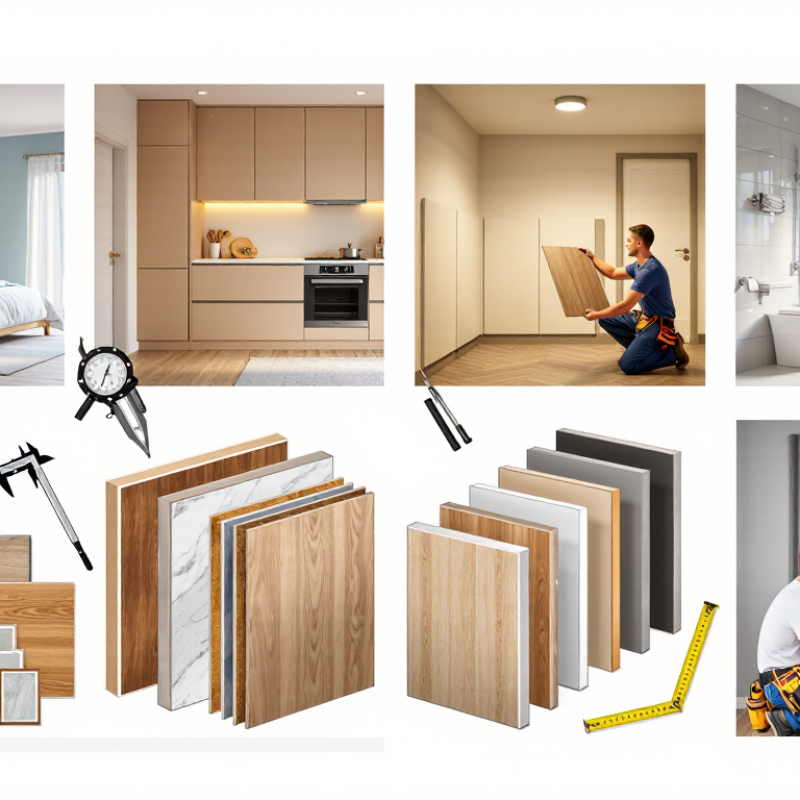
Decorative wall boards differ in both appearance and internal structure. PVC boards are lightweight and resist splashes, making them practical for laundry rooms or bathroom walls. WPC boards offer a warmer texture and better impact resistance, but their moisture performance depends on the formulation. MDF or plywood panels with a decorative veneer suit bedrooms and offices, where controlled humidity matters more than water resistance. Acoustic slat boards can soften echoes, although they will not soundproof a room.
Look closely at the core, not only the surface. A dense, stable core helps prevent bowing near windows or heating vents. Check the board’s moisture rating, fire classification, surface wear resistance, and formaldehyde emissions. Test reports should come from recognized laboratories and match the product batch when possible. Touch the sample edge. A crumbly edge may signal weak bonding. Small details matter.
Installation conditions also shape performance. Measure wall flatness, allow expansion gaps, and use compatible adhesives or fasteners. Dark boards can reveal uneven joints under bright lighting. I have seen attractive samples fail because installers ignored ventilation behind the panels. No board is perfect. Even a moisture-resistant panel can swell after standing water reaches an unsealed cut. Choose the core for the room’s real risks, then judge color and texture.
Typical installed weight is a practical factor when comparing decorative wall board types. Lighter boards are generally easier to handle and place less load on the wall, while heavier boards may offer greater rigidity or impact resistance.
Values show typical approximate installed weight ranges for commonly used decorative wall board materials. Actual weight varies with thickness, density, surface finish, framing, and installation method. Always verify the technical datasheet before selection.
Choosing the Best Decorative Wall Board
A room’s daily use should guide the board more than a passing trend. In a busy hallway, choose a surface that resists scuffs and cleans easily. Kitchens and bathrooms need careful moisture assessment, not just attractive patterns. Persistent dampness can damage unsuitable boards and weaken adhesives. Check ventilation, splash zones, and local building requirements before ordering materials.
Style goals matter, but lighting can change everything. A warm beige may appear yellow beside bright LEDs. Dark boards can make a small room feel enclosed. Request physical samples and view them at different times of day. Texture also affects maintenance. Deep grooves collect dust, while smooth finishes show fingerprints. I once preferred a dramatic ribbed panel, then reconsidered it after seeing how difficult it was to clean.
Installation conditions deserve equal attention. Measure wall height, electrical outlets, corners, and door trims accurately. The wall should be dry, stable, and reasonably level. Uneven surfaces may require preparation before fitting begins. Leave suitable movement gaps where the installation guide requires them. Confirm whether the board needs mechanical fixing, adhesive, or both. Poor preparation is often more visible than a modest design choice. Allow ventilation when using installation products, and ask a qualified installer about uncertain substrates or safety requirements.
How to Choose the Best Decorative Wall Board?
Comparing Materials, Durability, Maintenance, and Safety
A decorative wall board should match the room’s moisture, traffic, and cleaning demands. In dry bedrooms, engineered wood or fiberboard can provide warmth and a stable surface. Bathrooms need moisture-resistant panels with sealed joints. Natural wood looks rich, but it may expand when humidity changes. Composite boards often resist dents better, although their surface texture can feel less authentic.
Durability depends on more than thickness. Check the board’s impact resistance, edge strength, and installation requirements. A heavy panel can still fail if the wall is uneven. I once saw a beautiful board develop gaps because the installer ignored seasonal movement. That mistake was expensive. Choose mechanical fixings or suitable adhesives according to the manufacturer’s instructions. Keep extra boards for future repairs, because colors and textures may change between production batches.
Maintenance should be realistic. Smooth surfaces usually need only a soft cloth and mild cleaner. Deep grooves collect dust and require more frequent attention. Avoid abrasive pads, standing water, and untested chemicals. Safety deserves equal care. Look for tested fire-performance information and low-emission documentation, especially in bedrooms or children’s spaces. Ventilation during installation matters, even when odor seems mild. Some products appear safe at first, but poor cutting can release irritating dust. Wear suitable protection and clean the work area carefully. I still question whether the most attractive board is worth difficult upkeep.
| Evaluation Factor | PVC Wall Panels | Wood-Plastic Composite (WPC) | Moisture-Resistant MDF | Natural Solid Wood | Fiber-Cement Board |
|---|---|---|---|---|---|
| Typical Composition | Rigid polyvinyl chloride sheets, often hollow or cellular inside | Wood fibers or flour combined with thermoplastic resin and additives | Wood fibers bonded with resin and engineered for improved moisture resistance | Solid timber, usually finished with paint, stain, oil, or clear coating | Cement, cellulose fibers, mineral fillers, and water formed into dense boards |
| Appearance and Design | Wide range of printed, embossed, marble-look, and wood-look finishes | Textured wood-like appearance with a contemporary architectural style | Smooth, consistent surface suitable for paint, veneer, or decorative laminates | Authentic grain, natural variation, and a premium visual character | Usually painted or coated; suitable for clean, modern, and textured finishes |
| Moisture Resistance | Excellent Does not absorb water like wood, but joints and backing must be sealed |
Good Resists splashes and humidity, although prolonged water exposure can affect some formulations |
Moderate More resistant than standard MDF, but edges and cut areas still require protection |
Moderate Performance depends on species, coating, detailing, and indoor humidity control |
Excellent Highly resistant to moisture when correctly installed and detailed |
| Impact and Scratch Resistance | Moderate Can dent, crack, or puncture under strong impact |
Good Generally tougher than thin PVC panels, but surface damage may be difficult to repair invisibly |
Good Dense and stable, though decorative laminates can still scratch or chip |
Good Can be sanded and refinished; softer species may dent more easily |
Excellent Dense and robust, but edges may chip during cutting or rough handling |
| Dimensional Stability | Good Allows thermal movement and needs suitable expansion gaps |
Moderate Can expand and contract with temperature and moisture changes |
Good More uniform than solid wood, provided moisture exposure is controlled |
Moderate Naturally responds to changes in humidity and temperature |
Excellent Stable in normal service when properly supported and installed |
| Fire Safety | Limited Thermoplastic panels can soften, melt, and produce smoke; use only products with documented fire classifications |
Moderate Combustible unless specially formulated or combined with a tested fire-rated system |
Moderate Wood-based and combustible; fire performance depends on treatment and surface system |
Limited Combustible material; fire-retardant treatments may improve performance but do not make it non-combustible |
Excellent Generally non-combustible; verify the tested assembly and local code requirements |
| Cleaning and Maintenance | Very Easy Wipe with a soft cloth and mild detergent; avoid abrasive cleaners |
Easy Routine dusting and damp wiping are usually sufficient |
Easy Clean the finished surface gently and keep exposed edges dry |
Periodic Care May require recoating, oiling, or refinishing to maintain appearance |
Easy Clean painted or coated surfaces with a non-abrasive method and repair damaged coatings |
| Installation Considerations | Lightweight and easy to cut; use compatible adhesives, fasteners, trims, and ventilation details where required | Heavier than PVC; allow for movement and use corrosion-resistant fixings in humid areas | Requires accurate cutting, sealed edges, and a dry, stable substrate | Needs acclimatization, careful fastening, and allowance for natural movement | Heavier and dustier to cut; use appropriate tools, supports, and respiratory protection during fabrication |
| Repairability | Moderate Individual panels can often be replaced if the installation allows access |
Moderate Minor marks may be difficult to blend; damaged sections can be replaced |
Good Can be repainted or refaced, but swollen areas may need replacement |
Excellent Often repairable by sanding, filling, staining, or refinishing |
Good Small surface damage can be patched; severely damaged boards should be replaced |
| Environmental Considerations | Plastic-based and not biodegradable; recycling options vary by location | May use recycled polymers or wood fibers; end-of-life recycling depends on the product composition | Uses wood fibers efficiently; resin type, formaldehyde emissions, and certification should be checked | Renewable when sourced from responsibly managed forests; transport and finishing materials also affect impact | Durable and non-combustible; production is energy-intensive and the boards are relatively heavy |
| Best-Suited Applications | Bathrooms, utility rooms, kitchens, retail interiors, and areas requiring fast cleaning | Feature walls, hospitality interiors, covered semi-outdoor areas, and high-traffic decorative zones | Dry living spaces, offices, bedrooms, and painted or veneered feature walls | Living rooms, bedrooms, offices, restaurants, and interiors where natural character is important | High-moisture areas, façades or protected exterior zones, corridors, and projects prioritizing fire resistance |
| Overall Selection Priority | Choose when low maintenance, light weight, and moisture resistance are the main priorities | Choose when a wood-like appearance and improved toughness are desired, with movement properly detailed | Choose for a smooth, customizable interior finish in controlled indoor conditions | Choose for authentic appearance, repairability, and long-term refinishing potential | Choose when durability, moisture resistance, and non-combustible construction are especially important |
Note: Performance varies by product formulation, thickness, surface finish, installation method, and local building codes. Always request technical data sheets, indoor-air-emission information, and tested fire classifications for the specific board and wall assembly.
Cost begins with more than the price per panel. Measure each wall’s height, width, doors, windows, and awkward corners. Add at least ten percent for cutting waste, especially around electrical outlets. I once ordered too little material for a hallway with several recesses. The mistake delayed installation and increased delivery costs. A practical quote should include panels, adhesive, trims, fasteners, labor, transport, and disposal.
Dimensions affect both appearance and performance. Wider boards create fewer joints, but they may be difficult to carry through narrow stairways. Check panel thickness against the wall condition. Thin boards can reveal uneven surfaces. For bathrooms or kitchens, confirm moisture resistance through technical documents, not sales descriptions alone. Also review fire performance and local installation requirements. Ask for samples.
Accessories often determine the finished quality. Matching corner profiles can hide rough cuts. Edge trims protect exposed ends near doors and windows. Consider outlet spacers, joint treatments, and color-matched sealant before ordering. These small items are easy to overlook. They are not cheap after installation begins.
Long-term value depends on cleaning, repair, and replacement access. A durable surface should tolerate ordinary household use without demanding special products. Keep spare panels from the same production batch, because later colors may differ slightly. My own preference has changed after maintaining a difficult textured wall; beautiful details became frustrating dust traps. A simpler pattern may offer better value over time.
Choosing a decorative wall board begins with the room, not the pattern. Measure wall height, width, windows, outlets, and corner angles. A board that looks elegant online may feel too busy in a narrow hallway. For bathrooms or laundry areas, verify moisture resistance and approved sealing methods. For living rooms, prioritize surface durability, cleanability, and light reflection. Check the technical sheet, fire classification, thickness, weight, and recommended substrate. Do not rely on appearance alone. It can mislead.
Before ordering, draw a simple elevation and mark every joint. Add a small allowance for cuts, but calculate waste realistically around doors and irregular corners. I once underestimated an angled wall and had to reorder material. That mistake taught me to measure twice, then check the drawing against the actual room. Let boards acclimate indoors as the instructions require. Inspect each panel under good light. Separate damaged or color-shifted pieces before installation.
Prepare a flat, dry, stable surface. Remove loose paint, repair cracks, and confirm moisture levels where relevant. Find studs, pipes, and electrical cables before drilling. Use the specified adhesive or mechanical fixings, with even spacing and proper expansion gaps. Begin from a visible reference line, not from an uneven floor. Keep a spirit level nearby. Install corners carefully, because small errors become obvious there. Wear eye protection and follow local building requirements. Leave one spare board; future repairs rarely wait for convenient timing.